
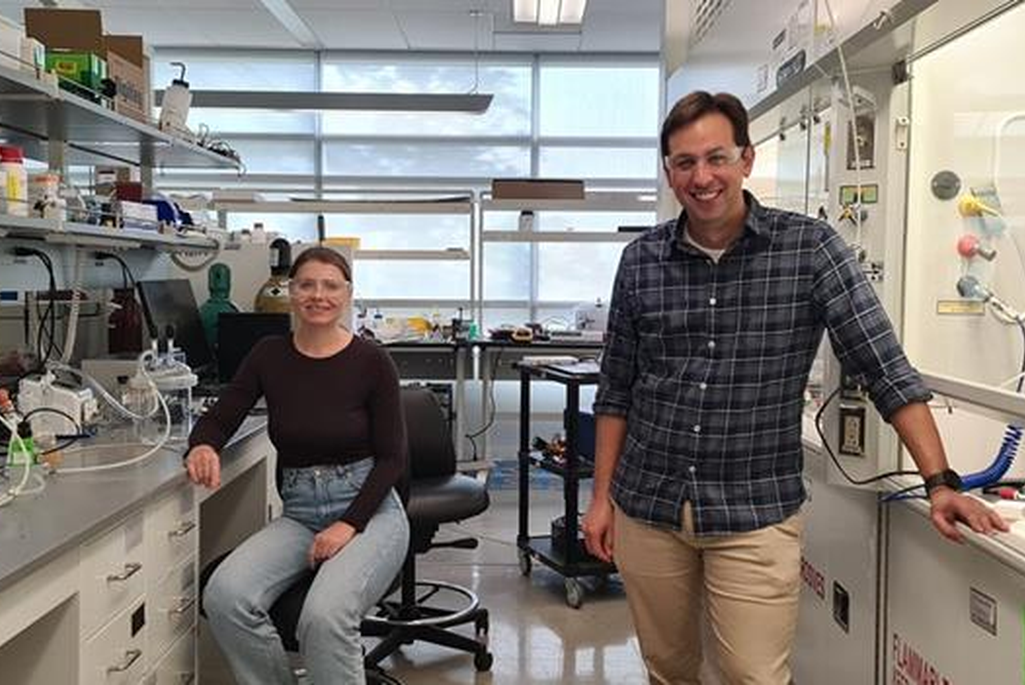
Ethylene gas drives fruit ripening and is a major culprit behind global food loss. New research led by Heloisa Bordallo (University of Copenhagen) with her group at Berkeley Lab, Karina Kovalchuk and Leander Michels, along with collaborators at Oak Ridge National Laboratory, Deakin University, and La Trobe University, shows how chemically engineered clay minerals can selectively capture and retain ethylene, pointing toward sustainable food packaging solutions.
The team combined neutron spectroscopy (using SNS data), X-ray scattering, and gravimetric analysis to show that acid-activated and choline-functionalized smectites control ethylene uptake through distinct mechanisms: acid activation maximizes adsorption via mesoporous surface sites, while choline modification improves long-term retention by stabilizing ethylene within the clay’s interlayers.
Notably, the work is among the first published studies to use Berkeley Lab’s new in-house SAXS instrument, alongside the quartz microbalance system acquired through Laboratory Directed Research and Development (LDRD) funding, which also supported the broader project. Together, these tools provided a molecular-level framework for designing tunable, low-cost ethylene scavengers.
Read the full University of Copenhagen news release, and the paper in Applied Surface Science Advances.
